Showing posts with label imaginary wild west. Show all posts

Tuesday, June 20, 2023

Pullman City -- Again!


I've let this blog slide over recent years, but I'm trying taking it up again -- as I just paid a visit to Pullman City, the "living western town" near Eging am See in Bavaria, for the first time in years!

It was fascinating to see how much remains the same, but also what has changed. And it was wonderful to be able to hang out with Willie Jones, probably the first person I met and made friends with in the European country music/imaginary wild west scene.

Me and Willie, Pullman City 2023
 

We met on my first -- or maybe second -- visit to Pullman City in the summer of 2003, amazingly fully 20 years ago! Willie then was the "singing cowboy" of Pullman, strolling around the Main Street and making music as he strolled.

We had a memorable adventure, driving from Pullman into southern Bohemia for a country night at a wild west road house....where I heard my first Czech country band, playing Okie from Muskogee, in Czech....

I wrote my first Imaginary Wild West article after those visits -- for the New York Times. Click HERE to read it.

This time Willie had an evening outdoor gig at Pullman's Hudson's Bay bar, in the so-called Authentic section, where hobbyists have permanent set-ups. 


He played gentle duets with his friend Wolfie, a frequent musical partner, whom I had met back in 2004, at Dobrofest in Trnava, Slovakia, when they were playing in a trio with John Ely

Dobrofest, Trnava, 2004

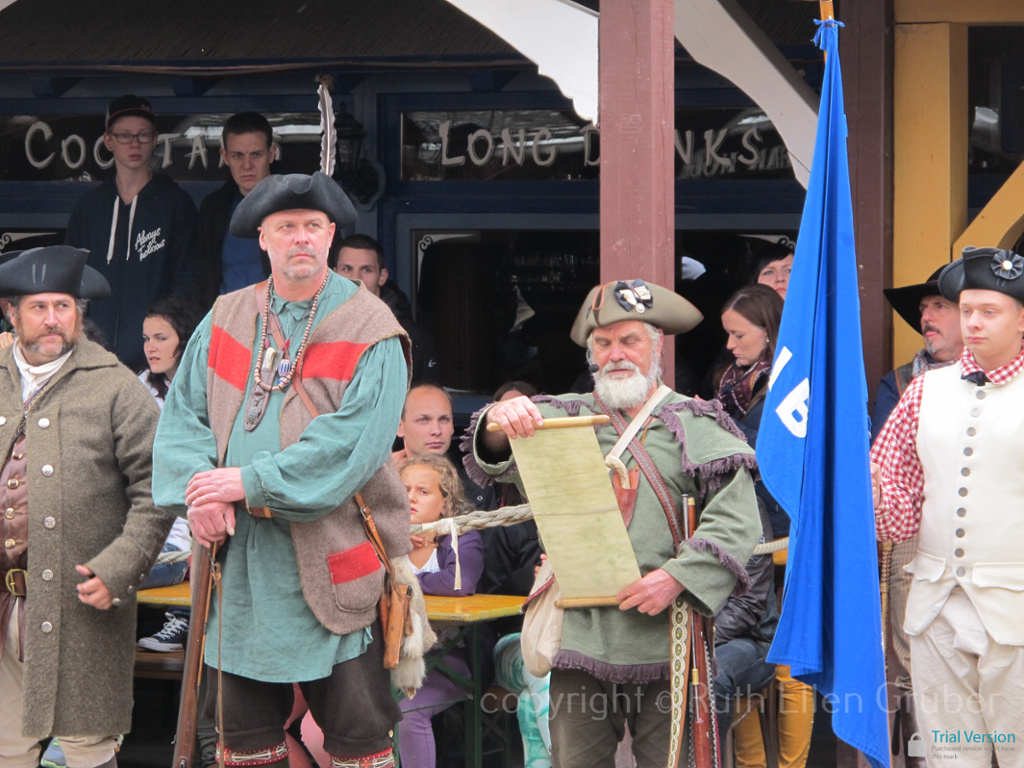
At Pullman this time, it was a special old-time hobbyist weekend, and many people were dressed up in Period styles.

There were trappers, clerks (or bankers? doctors? carrying what looked like briefcases or medical bags), elegant gambler-types, cowboys, etc. 


A big innovation that I didn't remember as being too popular in earlier visits were huge crinoline skirts. One woman I ran into en route to the ladies room had such a hard time maneuvering that she seemed almost trapped in the toilets!


The Hudson's Bay bar area seemed like a "safe space" -- maybe like a gay bar -- where hard core hobbyists could gather in their costumes and live their lives (and dreams) away from the commercialism and "family fun" tourism of the Main Street.

The main structural novelty of Pullman is the new (since I was there) Karl May theatre, an outdoor stage in an arena-like setting, similar to other wild west theme parks, where they are now staging plays etc based on Karl May's stories and characters. This summer they're doing Treasure of Silver Lake -- which I may have seen a Karl May festival years ago, in Austria or Germany.

Pullman's "American History Show" is now performed in the Karl May arena stage, rather than on Main Street, as before. Alas I couldn't see the whole show to see how it compared with past versions, as a huge violent storm blew up right in the middle, and sent everyone running for cover.

The storm's a-coming!

One of Pullman's "stars" when I used to go there years ago was "Hunting Wolf," billed as a half-Cheyenne shaman. His act entails dealing with bison.

When I first saw him, his long, flowing hair was black.... he still runs with the bison, and his hair is still long and flowing, but now it's white.


Monday, October 1, 2018

Western theme parks in CZ and PL -- catching up


Me at the Western Park in Boskovice

I can't believe it's been nearly a year since I updated this blog... time seems to fly faster and faster and, well, I'm lazy...and then again it's easier just to post links on the Facebook page... But I'll try to do some catching up in the next few days....

First, Wild West theme parks.

I managed to get to two of them this summer -- "Twin Pigs" in Poland, and the Western Park (once called Wild West City) outside Boskovice in the Czech Republic.


I've visited a number of wild west theme parks in Europe over the years -- they are key elements in the Imaginary Wild West. Real Imaginary spaces that have grown out of dreams, passions, stereotypes, and yearnings -- but also help create them.

This was my first visit to Twin Pigs -- but the latest of several to Boskovice.

The Boskovice park was founded in 1994 as a private initiative by a local man, Luboš "Jerry" Procházka, who developed the park in a natural setting in and around a disused sandstone quarry. The first time I visited -- in, I believe, 1997 -- it was out of season and the park was closed; I could only look at it over a fence. But I was struck by the view of the saloon and other movie-set buildings.

My first view of Wild West City, in 1997 - out of season


At that time, I was researching my book "Virtually Jewish" -- about the relationship of non-Jewish people to Jewish culture in Europe. I wrote this in an essay published at the time in The New Leader magazine (and also in my 2008 book "Letters from Europe (and Elsewhere)"):

Some people compare Europe's current interest in Jewish culture with the United States' interest in Native Americans. To be sure, I have seen Indian dolls wearing beaded costumes for sale in the Denver train station that reminded me of the "Jewish" puppets and figures I have photographed in Prague, Krakow, and Venice.

I was not surprised, therefore, by two posters I found on display in the Boskovice tourist office. One is for a jazz festival whose proceeds are to go toward renovation of the Jewish quarter. The other advertises a rodeo at a place called "Wild West City: Boskovice's Western Town." It features photographs of people dressed up like American Indians riding horses, with corrals, rickety wooden structures and even tepees in the background. A handbill shows a seductive Indian maiden looking over her shoulder.

I found Wild West City on my map, the edge of Boskovice, and stopped there on my way out of town. It is a theme park set up in an old quarry that resembles a stage set from a John Ford movie, replete with a flimsy wooden saloon and general store. A sign at the entrance reads, "Indian Territory." Another notes the kilometers to various spots in the American West -- most of them spelled incorrectly. It's off-season The place is deserted. The only sound is that of hoofbeats, as a costumed employee rides a horse round and round the repro corral.

Boskovice's Wild West main street


On subsequent visits over the years, I spoke with Jerry -- who is still the owner and managing director -- and observed the town "in action." It includes the usual wild west tropes -- a "main street," saloon, "boot hill",  bank, "Indian Village" etc.

In the Boskovice "Indian Village"

But I've always found it much more low key and laid back than some of the others I have visited -- there's a dusty slightly rundown feel -- though I did notice on my visit this July that some of the buildings had been repainted since my last visit. There also seemed to be more activity elements aimed at kids.

The imagery is based on US western movies and Karl May books, but it also is influenced by Czech tramping tropes. The Czech movie Lemonade Joe, a 1964 spoof of the singing cowboy genre, also plays a role -- in particular with the big "advertising" mural for "Kola Loka" -- the sarsparilla type drink enjoyed by the movie's hero.


Performance at Boskovice Wild West city in 2004

The park includes an outdoor theatre where live performances take place -- I didn't see one this summer (it apparently was based on the shootout at the OK Corral) but some years back I took in a performance based on Karl May's Winnetou characters.


Twin Pigs, located in southern Poland near Zory, off a main highway, is a somewhat different story, It employs the same general skeleton, but has quite a different feel: a purpose-built construct born out of a commercial business plan rather than from personal passion.

Opened in 2012, it is described as an amusement park, and it is much more "top down," planned out, and hard-edged than Boskovice, with its grassroots origin and -- despite recent improvements -- still rather amateur feel.

There is a regular lay-out along the Main Street, and also a ferris wheel, roller coaster, and other rides, restaurants, a 5D theater, and children's activity trails. Lots of red-white-and-blue bunting and American flags (and a few Confederate ones, too).
 

Twin Pigs main street, toward saloon

Twin Pigs Indian Village

Twin Pigs ferris wheel

Twin Pigs Main Street

Western Park Boskovice web site

Twin Pigs web site

Watch the movie Lemonade Joe


Monday, November 3, 2014

"Wild West" slack-lining in southern Poland.....


A group of European slack-liners recently held a gathering in southern Poland -- and the theme was the "wild west" -- bows and arrows, painted body art, feathers, whispery flute melodies.....

The resulting video is a mash-up of a wide range of Imaginary Wild West tropes, some of them just abstract sketches,  set to a rapping hip-hop sound track and breath-taking scenery.


Sunday, May 4, 2014

More evidence of growing Italian country scene


By Ruth Ellen Gruber

Here's more evidence that Italy's country western scene is developing.

The Italy blog Italy Chronicles runs a post about an Italian country singer named Fabrizio Pollastrelli who goes by the stage name Paul Aster and plays with a band called "The Fellows." His web site says they play "southern rock 'n' country music."

Aster hails from northern Italy and is currently based on Fano, in Le Marche on the coast.

Here he sings -- like so many other European country artists -- Country Roads....


Italy has a few wellknown, veteran bluegrass groups -- like Red Wine and Bluegrass Stuff -- but until fairly recently it has not had much of a "mainstream" country music scene.

As I've posted in the past , this seems to be changing. There is a slowly growing country-western-music-etc scene that includes country music and other general western festivals as well as a surging line-dance scene.

This is on top of fairly well-established western scene linked to horses and horse-riding, and the Cowboy Action Shooting scene, which has clubs in many parts of the country.

The biggest western event has long been the FieraCavalli -- horse fair -- in Verona.

Here's a video from the FieraCavalli 2009 -- masters of line dancing.


I can't forget that the first European country singer I met when I first started exploring the "imaginary wild west" was an Italian, "George McAnthony," from the South Tyrol/Alto Adige region. I saw him perform a couple of times and did a lengthy interview with him -- he was a nice guy and he and his story helped trigger my interest in the imaginary wild west phenomenon..Sadly, George died three years ago, aged only 45.

Still, just nine or 10 years ago I attended a  well-attended "Western Games" festival near Rome -- and there was no line-dancing, and the country band they had playing drew an audience of zero.


Monday, March 24, 2014

Buffalo Bill in Milano


"Wild West" toys for sale in Italy. I think that's Buffalo Bill on the bottom label. Photo © Ruth Ellen Gruber


Buffalo Bill toured his Wild West show all over Europe. These tours comprised one of three phenomena around 1900 that came together and helped solidify and spread the Imaginary Wild West in Europe -- the other two were Karl May's books and the birth of the movies.

You can now find a lot of material related to Bill's European Wild West tours online.

Check out this link -- to the full program of his show in Milan, Italy in 1906 

It's from the Buffalo Bill Online Archive of the Buffalo Bill Center of the West.

The tour opened in Genoa on March 14th, and closed in Udine on May 11th. The show  performed in Milan April 30th to May 5th.

The full tour route in Italy was:  Genoa, La Spezia, Livorno, Roma, Terni, Perugia, Arezzo, Firenze, Pisa, Parma, Modena, Bologna, Forli', Ancona, Rimini, Ravenna, Ferrara, Padova, Verona, Mantova, Cremona, Piacenza,Pavia, Alessandria, Torino, Asti, Novara, Como, Milano, Bergamo, Brescia, Vicenza, Treviso, and Udine.


Saturday, October 12, 2013

Filming at Pullman City Passau


The Star-Spangled Banner, during the American History Show. Photo © Ruth Ellen Gruber


As  posted earlier, I was back in  Pullman City, a wild west theme park in Bavaria, near Passau, a few weeks ago for some filming on a documentary on “Cowboys, Indians and Europeans” that is being made by the New York filmmaker Riva Freifeld, whose past work includes a documentary on Annie Oakley.
I’ve been exploring and researching the American wild west/American frontier in the European imagination for some years now. Good lord, 10 years in fact — I researched my first article on the topic (a travel piece on Pullman City and other European wild west theme parks for the New York Times) back in the summer of 2003, and already in 2004 I had a visiting scholar fellowship at the Autry National Center in Los Angeles to look into the marketing of the Frontier Myth abroad.


With Riva at Pullman’s Mexican restaurant, after the shoot. Photo: Stefan Grandinetti
What can I say about this latest visit to Pullman? In short -- it was fun — and a bit of old home week, as I caught up with some folks I had met years ago. Best of all, Riva thinks we got some good footage. She and her cameraman, Stefan Grandinetti, filmed me interviewing a variety of people who work (or hang out) at Pullman — from an “18th century minuteman” who has built a cabin in the “authentic section” of the park, where hobbyists and reenactors can construct their own dwellings, to Hunting Wolf, the “half blood Cheyenne” who conducts programs based (in part) on Native American lore; to Detleff Jeschke, a former prize-winner rodeo rider who has long been the park’s program director.
The scene was much as I found it in 2003 and on my subsequent visits (the last time I had been there was at Xmas in 2009, when my country singer friend Willie Jones played Santa -- I posted about that on this blog.
Here are some pictures from the shoot last month:

Hunting Wolf and his buffalos. Photo © Ruth Ellen Gruber

Riva and Stefan filming the American History Show. That’s Detty Jeschke on the horse. Photo © Ruth Ellen Gruber


The minuteman hobbyist “Richard Baker” reads the Declaration of Independence during the American History Show. Photo © Ruth Ellen Gruber

In the saloon…. Photo © Ruth Ellen Gruber

I always enjoy going to Pullman City Passau…and also to Pullman City Harz, a sister wild west theme park in north-central Germany. These places become a world of their own.
At Pullman City Passau, the organizers are keen to emphasize that it is a “living” western town, because of the “Authentic Area” where hobbyists actually live — on weekends and vacation time. Some come even in the winter, modeling their “real imaginary” lifestyles on the 19th century past, even in the bitter cold.
A number of songs have been written about both Pullmans.  They tend to play on the country music trope of “home” that make “Country Roads” and “Sweet Home Alabama” so popular….
Here’s the official Pullman City song, declaring that Pullman City is “my home town.”

And this one seems to have been written by a fan


Saturday, September 21, 2013

Filming in Pullman City!

This is a picture from several years ago, but some of these guys may have been in the Pullman City saloon last night! Photo © Ruth Ellen Gruber


Just a quick note -- I arrived in Pullman City, the wild west theme park in Bavaria, to do some filming on Revia Freifeld's documentary on the imaginary wild west in Europe, The Old World and the Old West!

I has been just over ten years since my first visit here, when I wrote about it for the New York Times. I've been here several times since then... looking forward to see what's changed and what has not....

This is what I wrote after my first visit, and it still stands!

IT'S nowhere near high noon, but a tough-looking hombre in a black leather vest, black stovepipe pants and a black cowboy hat is sauntering down the dusty length of a frontier Main Street, a gun belt slung low on his hips.
He strolls past the sheriff's office, the Palace Hotel and a saddled horse hitched loosely to a wooden railing, then pauses for a moment at the broad covered porch of the Black Bison Saloon.
Entering, he strides up to the bar and places his order.
''Ein bier, bitte.''
This is Pullman City, a theme park in southern Germany where more than a million visitors a year step out of 21st-century Europe into an American Wild West fantasyland of stagecoaches, gunfighters, mountain men and Indians.
Set on 50 rolling acres a two-hour drive northeast of Munich, near the Bavarian town of Eging am See, Pullman City is a compendium of mythic iconography engrained in the global psyche by well over a century of hugely popular adventure stories, movies, television shows and traveling Wild West extravaganzas.


Wednesday, May 22, 2013

Cowboy chambre in France


Lobby of the hotel at Pullman City Hartz. Photo © Ruth Ellen Gruber


By Ruth Ellen Gruber


I love finding "wild west" places to stay (and eat) here in Europe. Restaurants, cafes and saloons are not hard to come across -- and a lot of them feature music. But hotels are something else.

Most wild west theme parks have old fashioned style hotels in their wild west towns -- but alas, I've never managed (or afforded) to stay in one of them.

I did have a memorable stay a few years back in the "Little Texas" hotel in Iasi, Romania .... it seemed a lot simpler place in 2006 than it looks now, at least on the web site. (And I don't remember it being four star).

Here's what the web site says now:

THE FAMOUS AMERICAN HOTEL AND RESTAURANT IN IASI, ROMANIA CREATING A LITTLE PIECE OF TEXAS - SINCE 1997 
Just breeze through our authentic old west swinging saloon doors and you are immersed in the Old Southwest. Original & unique American cowboy decor combines with a warm and inviting ambiance. Rich massive wood and great country music conspire to create the sensation that indeed you have stepped into an American Restaurant of yesteryear. Our friendly and attentive staff is on hand to ease you out of the hectic day and into the "Little Texas Experience". Relax and unwind amidst the splendor of our magnificent restaurant garden terrace. Slake that burning thirst from the long dusty trail with a refreshing smoothie drink, a house specialty. 
Little Texas features 32 four star hotel rooms & suites, each with custom crafted American furnishings including large beds especially designed with your best night's sleep in mind. Each room features a fully stocked mini-bar, free wi-fi access, air-conditioning, direct-dial phones and flatscreen TV. 
Most hotel rooms enjoy a stunning panoramic view over the garden and the city below.
All rooms include our full American ala carte breakfast, featuring fluffy pancakes, tasty waffles--piping hot, homeade maple syrup, the perfect omelette--made your way or eggs-crisp bacon with hash browns. 
Our all original Tex-Mex menu offers a Texas size solution for that ranch hand hunger. Sink your teeth into our signature steak, the famous "Little Texas platter"-marinated filet mignon, available with all the trimmings; twice baked potatoes, hand made nachos, sauteed vegetables and spindle top salad. For dessert polish off a slab of our fresh baked double crust apple pie ala mode or the irresistible Texas mud cake - for an explosion of rich chocolate! 
Our Alamo conference room is the ideal choice for your next meeting or event. Fully equipped for your every need, the Alamo room provides a private and discreet setting with a secluded adjoining terrace surrounded by the breathtaking beauty of nature.
Let our experienced and caring staff help plan and organize your next special event, whether a corporate gathering, wedding, anniversary, baptism, party or concert - for groups of up to 150. 
LITTLE TEXAS HOTEL AND RESTAURANT, AMERICAN OWNED AND OPERATED!

I recently came across another place -- this time in France, in the beautiful southern Dordogne area.

The Laboucario Ranch looks like a Saloon and offers "Chambre d'Hôtes Country Western."

I'd love to check it out!


Sunday, May 19, 2013

Exhibit on Lucky Luke opens June 2


An exhibit on the cartoon cowboy Lucky Luke opens June 2 at the Karikatur Museum in Krems, Austria -- I'm hoping to get there to see it. Lucky Luke is an immensely popular comic book series created in the 1940s by the Belgian cartoonist Maurice De Bevere, better known as Morris.

The exhibition will run until November 17. It will include original drawings as well as material about the Imaginary Wild West (and -- maybe -- the historic one) and there are various events connected to it.

Enter the world of Lucky Luke on his web site.

For further information about the exhibition, see the web site or contact (or visit) the Museum:

Steiner Landstraße 3a
A-3500 Krems-Stein
T: (+43-2732) 90 80 20
F: (+43-2732) 90 80 21
office@karikaturmuseum.at

Monday, January 28, 2013

Italian cowboy exhibit at Western Folklife Center


Andrea "Drew" Mischianti on the fence, Western Games, 2005. Photo © Ruth Ellen Gruber


By Ruth Ellen Gruber

An exhibition of Italian "cowboy" life will open at the 29th National Cowboy Poetry Gathering at the Western Folklife Center in Elko, Nevada. The exhibition will then run from Feb. 1 to Sept. 9.

It was put together by Andrea "Drew" Mischianti and his wife, Natalia Estrada, and is based on photographs taken by Estrada. They document the "butteri," or Italian mounted shepherds/cowboys of Tuscany's Maremma region, but also the U.S. West-style round-ups and cowboy life lived in Italy by Mischianti, Estrada and other enthusiasts. (Call them "spaghetti cowboys"....)

Here's a video the couple put together about it:


I met Mischianti on several occasions, when he was working for a "ranch" near Lake Bracciano, west of Rome. He was a prime mover of the Western Games held there for several years -- rodeo and riding competitions, with lots of other attractions, stalls, Indian dancing and the like. I think I still have a text message saved on my cellphone when he invited me to come there to watch (or take part in) branding.

Disembodied Headdresses at the Western Games near Rome. Photo © Ruth Ellen Gruber

Mischianti has been very active in the Italian western, horse, riding and cowboy scene for many years and long wrote a column about the cowboy life for an Italian wild west magazine. He and Estrada run a "Ranch Academy" to teach and take part in "buckeroo" skills and lifestyle. They also take part in competitions and exhibitions of skills.


Sunday, January 22, 2012

Imaginary Wild West meets Modernity.... off geographic topic but interesting

The New York Times runs a piece today about historic Tombstone Arizona's battle to deal with the mountains of trash produced by the 200,000 tourists who visit each year to experience the world of Wyatt Earp, etc

It is fair to say that well before the Earp brothers shot three cowboys in a lot behind the O.K. Corral, this city had a trash problem. Mule and horse droppings were everywhere. The stench of leather being tanned, charcoal burning and ore being dug out of the earth burned the nostrils. Garbage piled high in the muddy streets.

The article notes that Tombstone issued an ordinance in 1881 -- Ordinance 6 -- that created a Board of Health and stipulated how to dispose of animal carcasses, rotting food and dead bodies. This ordinance was enacted before the much better known Ordinance 9 -- the one, also issued in 1881, that banned carrying guns in the city.

And still, more than 130 years later, the city continues to wrestle with its refuse.

Saturday, October 1, 2011

France -- Paris Western Show!

By Ruth Ellen Gruber

The Paris Western Show last weekend! Oh man, why wasn't I there?? (Though there are actually not too many people to be seen in the video....)

Thursday, July 28, 2011

Laos -- Country Music from Thailand

By Ruth Ellen Gruber

A radio station is going to be beaming country music into Laos from Thailand in order to boost business and adverting, according to an article in the Thai newspaper/web site The Nation.

R Siam, RS's country-music subsidiary, will use Sabaidee TV to penetrate Laos to boost advertisers' confidence to spend more money on its satellite channel as well as to seek business partners to provide music-download services. "Laos has high potential for the Thai country-music business because its people understand Thai culture and language, while most of them are able to access both free and satellite television services from Thailand," said Soopachai Nillawan, managing director of R Siam. A survey by the company found that Sabaidee TV was the most popular satellite channel in Laos.[...] Soopachai said the overall country-music market in Thailand was worth about Bt1.5 billion annually, of which R Siam accounted for 45 per cent.

I don't know anything about the country music scene in Thailand, but I've written on this blog about the general wild west scene in Thailand, including at least one wild west theme park.  Erik Cohen, an emeritus professor of anthropology (and expert on tourism studies) at Hebrew University in Jerusalem, who lives in Thailand  has included a lengthy -- and fascinating -- description and analysis of "Thai Cowboys" in his book Explorations in Thai Tourism, published in 2008 by Emerald, Bingley

Monday, December 13, 2010

USA -- Interesting Private Real Imaginary Wild West in Arizona

by Ruth Ellen Gruber

The Los Angeles Times reports on a private Wild West town in Arizona.....Cowtown Keeylocko: "An odd mixture of the real and the fanciful, this 'town' is technically a working ranch in the middle of the desert. But to its founder it's a cowboy's paradise."

The article, by Nicole Santa Cruz, is about Ed Keeylocko, 79, who is:
the founder of Cowtown Keeylocko, an 80-acre spread with handmade buildings of wood and tin. Founded in December of 1974, it's and located about 40 miles southwest of Tucson, it lies at the end of a bumpy dirt road where a sign greets visitors: "Population 5 — most of the time."

Technically, it's a working ranch in the middle of the desert, with a Tucson postal address. But to Keeylocko, it's a Wild West town — his town — and folks around this part of the state tend to view it the same way.

The town is an odd mixture of the real and the fanciful. There's a "library" with books, and a barn with real cows, pigs and chickens. But the "general store" is essentially a wooden building filled with stuff that no one would buy.

There's even a cemetery where friends' ashes are buried, and a mesquite tree festooned with various discarded boots. And, of course, there's the Blue Dog Saloon — the main attraction — which feels more like a large barn, with dirt floors and a heavy coat of dust. A weathered green baby carriage hangs from the rafters, though it's not clear why.

For decades, word of mouth has brought Tucsonans to the his ranch for parties, some opting to sleep at on the property campgrounds — if they sleep at all. Producers have staked out the grounds for movies, but usually the only residents are Keeylocko and one or two ranch hands.
 The story reminds me very much of the private wild west towns I have visited in Europe, founded by individuals who wanted to "live their dreams."

There's the private Old Texas Town in Berlin, and of course Pullman City -- which went commercial.

But they also include Halter Valley, in the Czech Republic -- whose founded told me he had been rejected for a U.S. visa five times and had never visited the States.

Sikluv Mlyn, also in the Czech Republic was founded by a man who told me he wanted to created his "own America" -- he went commercial and now has a branch in Slovakia, expanded into a fullscale theme park.

Wild West City outside Boskovice, in the CZ,  has also gone commercial. But nearby Beaver City  has remained a private Wild West enclave.

Thursday, December 9, 2010

Oh No! Pullman City files for bankruptcy!

Pullman City, during Christmas market, December 2009. Photo (c) Ruth Ellen Gruber

By Ruth Ellen Gruber

Oh no! According to news reports, Pullman City in Eging a. See, Germany, one of Europe's premier Wild West theme parks, has filed for bankruptcy.
Am Montagnachmittag hat die Pullman City Betreiber GmbH beim Amtsgericht Passau Insolvenz angemeldet. Der Betrieb soll auf alle Fälle aufrecht erhalten werden. Rechtsanwalt Oliver Mühlberger, der zum vorläufigen Insolvenzverwalter bestellt wurde, kündigte auf PaWo-Nachfrage an, dass alle kommenden Veranstaltungen wie geplant stattfinden sollen und bittet um „zahlreiche Besucher”[...]
 
Wie kann es sein, dass dieser Besuchermagnet in finanzielle Schieflage geraten konnte? Darüber wird momentan gerätselt. Liegt es daran, dass es wegen des verregneten Sommers nicht so lief, wie es eigentlich hätte laufen sollen? „Keiner hat mit einem Insolvenzantrag gerechnet, ich bin selber überrascht”, erklärt Insolvenzverwalter Mühlberger, der momentan dabei ist, sich in die Materie hineinzuarbeiten. Für ihn steht schon jetzt fest, dass die Westernstadt als „führender Freizeitpark” in der Region auf alle Fälle Zukunftspotential hat. „Der Betrieb soll wie eh und je weiterlaufen”, betont Mühlberger.
 
Die ganze Region drückt jetzt Pullman City die Daumen und hofft auf das Motto: „The Show must go on!”

Read full story on web site

Pullman City, located near Passau in Bavaria, was founded in 1997 by a group of Wild West enthusiasts who had already staged wild west shows and competitions -- I first wrote about Pullman City in a 2004 article in the New York Times. A second Pullman City now operates in central Germany near the small town of Hasselfelde. (A third one, near Vienna, Austria,  closed several years ago.)

So far its web site does not reflect any changes -- the program for the German-American Christmas market (which I attended last year) and other events is up.

Bonanza -- international appeal

By Ruth Ellen Gruber

The Autry Museum's Libraries blog runs a revealing post illustrating the international appeal of the TV show Bonanza.

It is based on material in the archives of David Dortort, the pioneering creator and produce of Bonanza, who died in September and who left his papers to the Autry National Center's library.
International magazines also celebrated Bonanza’s popularity and high quality production. Belgian weekly radio and television magazine Humo rated the show #1 in its 1966 annual poll. The David Dortort Archive is packed with magazines from around the world, with a particular strength in publications from European countries.
 The blog post features magazine covers in languages including

German:

http://autrylibraries.files.wordpress.com/2010/12/deframed-003.jpg
From the Autry Libraries  blog: A Cartwright for Every Woman


And Vietnamese:

http://autrylibraries.files.wordpress.com/2010/12/dortortvietnamese.jpg
From the Autry Libraries blog: 1969

Monday, December 6, 2010

USA -- Wild (and sometimes Imaginary) Wild West in Harrisburg, PA

By Ruth Ellen Gruber

My cousin in Harrisburg turned me on to this fascinating story of a former mayor amassing, with taxpayer money, a cache of wild west artifacts -- some of them fake -- for the city of Harrisburg (Pennsylvania's capital) for a not completely determined purpose....


Sunday, December 5, 2010

Puccini's "Girl of the Golden West" Centennial Celebrations

 Share/Save/Bookmark

By Ruth Ellen Gruber

This week marks the centennial of the world premiere of  "La Fanciulla del West" -- the opera by the Italian composer Giacomo Puccini based on the play "The Girl of the Golden West" by David Belasco... and celebrations are under way to mark the occasion.

The opera is set during the California Gold Rush, with a wealth of wild west figures, stereotypes and iconic situations and atmosphere: the Imaginary Wild West as high culture. (I described my own visit to the Gold Rush country in October in a blog post on this site.) Puccini was inspired to some extent by Buffalo Bill's Wild West, which he saw in Italy when it made one of its tours of Europe. Puccini also owned a copy of a 1907 book on Native American music, which he used in composing the opera. He also owned a copy of Alice C. Fletcher's 1906 book  "Indian Story and Song from North America."

The premiere took place at the Metropolitan Opera in New York City on December 10, 1910 with Enrico Caruso and Emmy Dustin in the leading roles as Dick Johnson and Minnie, and Pasquale Amato as Jack Rance.  Arturo Toscanini was the conductor. The event merited a front page story in the New York Times.

Here's a clip of a young Placido Domingo singing an aria from it:


A web site has been launched for the centennial, and a symposium is taking place this week at Boston University.
The Metropolitan Opera will present La Fanciulla del West conducted by Nicola Luisotti and starring Deborah Voigt, Marcello Giordani, and Lucio Gallo, beginning December 6 and running through January 8, including a performance on December 10 one hundred years to the day of the premiere. Simonetta Puccini, the composer's granddaughter, and Walfredo Toscanini, the maestro's grandson, are expected to attend. The final performance on January 8 will be seen in more that 1,500 movie theaters around the world as part of the Met’s Live in HD series and broadcast live over the Toll Brothers-Metropolitan Opera International Radio Network.

Here is a synopsis of the opera from the www.fanciulla100.org web site

Act I. The interior of the Polka Saloon
 
A group of Gold Rush miners enter the saloon after a day working at the mine. After a song by traveling minstrel Jake Wallace, one of the miners, Jim Larkens, is homesick and the miners collect enough money for his fare home. A group of miners playing cards discover that Sid is cheating and want to attack him. Sheriff Jack Rance quiets the fight and pins two cards to Sid's jacket, as a sign of a cheater. A Wells Fargo agent, Ashby, enters and announces that he is chasing the bandit Ramerrez and his gang of Mexicans. Rance toasts Minnie, the girl who owns the saloon, as his future wife, which makes Sonora jealous. The two men begin to fight. Rance draws his revolver but at that moment, a shot rings out and Minnie stands next to the bar with a rifle in her hands. She gives the miners a reading lesson from the Bible. The Pony Express rider arrives and delivers a telegram from Nina Micheltorena, offering to reveal Ramerrez's hideout. The sheriff tells Minnie that he loves her. But Minnie is waiting for the right man. A stranger enters the saloon and asks for a whisky and water, who introduces himself as Dick Johnson from Sacramento, and whom Minnie had met earlier. Johnson invites Minnie to dance with him and she accepts. Angrily, Rance watches them. Ashby returns with the captured Ramerrez gang member, Castro. Upon seeing his leader, Johnson, in the saloon, Castro agrees to lead Rance, Ashby and the miners in a search for Ramerrez, and the group then follows him on a false trail and in what turns out to be a wild goose chase. But before Castro leaves, he whispers to Johnson that somebody will whistle and Johnson must reply to confirm that the place is clear. A whistle is heard, but Johnson fails to reply. Minnie shows Johnson the keg of gold that she and the miners take turns to guard at night and Johnson reassures her that the gold will be safe there. Before he leaves the saloon, he promises to visit her at her cabin. They confess their love for each other. Minnie begins to cry, Johnson comforts her before he leaves.

Act II. Minnie's dwelling

Wowkle, a Native American squaw who is Minnie’s servant, her lover Billy Jackrabbit and their baby are present as Minnie enters, wanting to get ready for Johnson’s visit. Johnson enters Minnie's cabin and she tells him all about her life. It begins to snow. They kiss and asks him to stay till morning. He denies knowing Nina Micheltorena. As Johnson hides, a posse enters looking for Ramerrez, revealing to Minnie that Johnson himself is the bandit. Angry, she orders him to leave. After leaving, Minnie hears a gunshot and she knows Johnson has been shot. Johnson staggers in and collapses, and Minnie helps him by hiding him up in the loft. Rance enters Minnie's cabin looking for the bandit and is about to give up searching for Johnson, when drops of blood fall on his hand from the loft above where Johnson is hiding. Rance forces Johnson to climb down. Minnie desperately makes Rance an offer: if she beats him at poker, he must let Johnson go free; if Rance wins, she will marry him. Hiding some cards in her stockings, Minnie cheats and wins. Rance honors the deal and
Minnie throws herself on the unconscious Johnson on the floor.

Act III. The Great California Forest

Johnson is again on the run from Ashby and the miners. Nick and Rance are discussing Johnson and wonder what Minnie sees in him when Ashby arrives in triumph: Johnson has been captured. Rance and the miners all want Johnson to be hanged. Johnson accepts the sentence and only asks the miners not to tell Minnie about his capture and his fate.
Minnie arrives, armed with a pistol, just before the execution and throws herself in front of Johnson to protect him. While Rance tries to proceed, she convinces the miners that they owe her too much to kill the man she loves, and asks them to forgive him. One by one, the miners yield to her plea. Rance is not happy but finally he too gives in. Sonora unties Johnson and set him free. The miners bid Minnie farewell. Minnie and Johnson leave California to start a new life together.

Sunday, November 21, 2010

France -- Where to eat Western and buy western duds and other Americana...online

 Share/Save/Bookmark


Here's a link to "American Shop Avenue" -- an online one-stop shop for everything Americana...clothes, CDs, accessories, you name it.

It's run by the folks behind a chain of Country-western restaurants in northwest France called "Oncle Scott's country restaurants" -- a joint venture between Frenchman Laurent Marie and a former trucker and country singer Scott Randall Rhodes.

According to the Oncle Scott's web site, the two met in 1996 when Marie
was realizing his dream of exploring America. He had landed in New York, his backpack his only companion. Not seeing any cowboys in the city they call the “Big Apple,” Laurent decided to head for Texas. First by bus, then by car, Laurent crossed many states, including the state of Tennessee.

He stopped in Nashville, then in Memphis, and discovered the cultural richness there was to be found in America’s short history. Rock ‘n’ roll and country music were everywhere, and Laurent was already getting ideas for his future business.
Arriving in Texarkana, Texas, the young Frenchman was overcome by a fever so severe that he decided to discontinue his journey. He turned back towards the east, and it was in the town of Vicksburg, on the border of Mississippi and Louisiana, that Laurent pulled into a rest stop alongside the highway. Parked next to him was a cowboy polishing his four-wheel drive, so typically American. This is the beginning of the story, a story of friendship…

After brief introductions, Scott invited Laurent to have a drink and get to know each other better. Their conversation lasted three days! Three days during which Scott explained the heart of America and, especially, the heart of Americans. "With Scott, hospitality is written with a capital H," recalls Laurent. "He is the nicest and most sincere man I’ve ever known, he is always in a good mood and always ready to socialize …"

A while later, Scott was invited by Laurent to discover France…

Wednesday, October 13, 2010

Gold!

Photo (c) Ruth Ellen Gruber
Share/Save/Bookmark

There's gold in them thar hills! The discovery of gold by James W. Marshall at Sutter's Mill in what is today California, on January 24, 1848 sparked the extraordinary migration of as many as 300,000 people who "rushed" to the region by land and sea to seek their fortune in search of the yellow metal.

The Gold Rush and fabled Mother Lode captured the world's collective imagination, inspiring songs and stories, literature and tall tales, as well as attracting fortune-seekers from all directions. Boom towns grew up, and prospectors and gold-panners became Wild West archetypes, part and parcel of the set of Frontier characters that ranged from Native Americans in feathered headdress to cowboys, trappers, schoolmarms and whores. Indeed, gold-panning ponds are de rigeur features of some of the Wild West theme parks in Europe, and there are gold-panner hobbyist/reenactor groups. One of these hobbyists taught me to pan for gold when I visited Beaver City, a private wild west town in the Czech Republic.

I learn to pan for gold in Beaver City

Last week, I spent a day in the "real" Gold Rush country, partaking in a mash-up of experiences that blended today's realities with the romance of the Imaginary West.

I visited Sutter's Mill itself, where a nicely laid out museum park tells the Gold Rush story through monuments, mock-ups of old buildings (reminiscent of stage-sets, theme-parks or European skansen open air museums) and preserved original sites. From the top of a hill, a monument to Sutter surveys the scene.

Photo (c) Ruth Ellen Gruber

The park includes two fascinating pioneer cemeteries, one Protestant and one Catholic, whose tombstones and epitaphs told the story of European fortune-seekers who ended up in this corner of California. (I also visited the tiny Jewish cemetery in Placerville - I posted about this on my Jewish Heritage blog.)

What was particular interesting at the cemeteries was to see the stones on which was inscribed as part of the epitaph the origin of the deceased: "A Native of Germany," "A Native of Ireland," etc etc: all drawn, one way or another, by the lure of gold.

Catholic cemetery. photo (c) Ruth Ellen Gruber
Protestant cemetery. Photo (c) Ruth Ellen Gruber
I stayed (natch) at the Mother Lode Motel in Placerville,  a tourist town in the heart of the region, where Wild West kitsch similar to that found in Europe is on sale.

Photo (c) Ruth Ellen Gruber
There is a historic 19th century hotel in town, the Cary House.

Cary House. Photo (c) Ruth Ellen Gruber
But the Mother Lode was more my price range -- and it had free WiFi, too.

Mother Lode Motel, Placerville. Photo (c) Ruth Ellen Gruber

What brought me to the Gold Rush territory also formed part of the real imaginary mash-up -- my friends, the  Czech bluegrass/country/acoustic rock band  Druha Trava, were giving a concert in Placerville on Oct. 6. (I toted my newly purchased ukulele to the gig -- I don't know how to play yet, though -- and wore, of course, my cowboy boots....)

Photo (c) Ruth Ellen Gruber

Here's some video from the show: