Oh, those Czechs.... I love this! "Kovboj z Teplic" by Kamil Střihavka and No Guitars. 1995
Sunday, May 13, 2012
Oh, Those Czechs...
Oh, those Czechs.... I love this! "Kovboj z Teplic" by Kamil Střihavka and No Guitars. 1995
Saturday, November 12, 2011
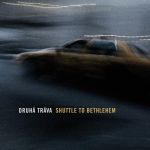
Czech/US/Music -- Druha Trava and Shuttle to Bethlehem on U.S. national NPR radio
More DT and Shuttle to Bethlehem -- the band's English-language CD that mainly features my translations of Robert Krestan's original Czech songs.
A story on the band and the CD, by NPR political correspondent Don Gonyea, ran on National Public Radio's "Weekend Edition" show today. Read a short version of it HERE or listen to the full story HERE.
The first time I heard Druha Trava play was April 2009. I was covering President Obama's trip to the Europe. There was a big outdoor speech in Prague, and the band was playing Czech versions of Bob Dylan songs.
I did a short radio postcard story back then, figuring it was the kind of experience that every music fan knows: You stumble upon a great band somewhere and never see them again.
Now it's the fall of 2011, and I'm chasing candidates around Iowa. Who should be doing a show at the Czech and Slovak Hall in Cedar Rapids? Druha Trava.
Thursday, October 13, 2011
Czech/US/Music -- Druha Trava's English language CD is Out

By Ruth Ellen Gruber
Shuttle to Bethlehem, the new English-language CD by the Czech band Druha Trava, is officially out now in the Czech Republic -- and the band is in the US at the start of a five-week tour to launch it. I take particular interest because I was involved with the CD production -- I translated Robert Krestan's songs and also helped out in the studio during recording. You can find the English lyrics HERE.
I'm eager to see how the CD is received -- so far, comments are very positive. One newspaper editor I know in Minneapolis called it on Facebook "a great album, and a wonderful introduction to the renowned "Czechgrass" band."
Tuesday, July 26, 2011
Czech Republic -- In the Studio with Druha Trava
| In the studio. Photo (c) Ruth Ellen Gruber |
In mid-July I spent two days in a Prague studio helping record the vocal tracks for a new CD by the Czech country/bluegrass/fusion group Druha Trava. Founded 20 years ago, in 1991, DT and its various members have brought out more than a score of albums, including several in English -- see a history of the group by Lilly Pavlak, posted on the European Bluegrass Blog by clicking HERE
But the new Druha Trava CD -- tentatively titled "Shuttle to Bethlehem" after one of the songs (the inspiration was Bethlehem PA, not the "other" one) is the first that will primarily feature English-language versions of singer-songwriter Robert Krestan’s distinctive original songs.
I made the translations, and the studio session was the culmination of a collaborative project that had taken more than five years to come to fruition.
During the recording session, we were joined in the studio by Lee Bidgood -- a wonderful musician who did his PhD on Czech bluegrass and now teaches at East Tennessee State University, which has a Bluegrass, Old-Time and Country Music Studies program -- and his colleague from ETSU, the documentary filmmaker Shara Lange, who are making a documentary on Czech bluegrass. They filmed the session and also interviewed Robert, banjoist Lubos Malina and me.
![]() |
| Lee and me when we met in 2004 |
Lee is one of the first people I got to know what I was starting to follow the Czech bluegrass scene -- we met at the Caslav bluegrass festival in 2004 and I recall how wonderful it was to talk to someone who also was looking at the scene and the music from the "outside" and considering the same questions that I was.
While he was doing research in CZ a few years ago, Lee kept a wonderful blog in which he described music and musicians and reflected on the history and trajectory of the music in the Czech Republic. He hasn't posted anything lately, but it is a terrific resource.
I wrote about the Prague recording session this week in a post on the Arty Semite blog of the Forward, describing a bit of the complex process of translation. I started translating Krestan's songs into English in 2006 and continued working on them as one facet of the "Sauerkraut Cowboys/Indian Dreams" project for which I had a Guggenheim Fellowship and NEH summer grant.
My first goal was basic: I loved the Czech originals, but I wanted to know what they meant. As I started working, though, it seemed much more logical — and in fact, even easier — to put them in a rhyming form that could be sung. The process was surprisingly straightforward.
A young student in Prague, David Kraus, supplied me with word-for-word equivalents. David’s father Tomas is an old friend, the secretary of the Federation of Czech Jewish Communities, but he also knows a lot about the Czech country music scene. In Communist times Tomas’s late brother [Ronald Kraus] produced, wrote and translated songs for several key Czech tramp and country-style groups [including the iconic band KTO]..
I took the words that David gave me, compared them to the rhythm of the original Czech lyrics, and listened over and over to the original songs in order to capture their meaning and rhyme structure as well as to fit them to the melodies.
Czech is a more bristly language than English, with quite different sounds and cadences, and Krestan uses words for their tonality as well as meaning. But remarkably, my lyrics got to a point where they seemed to click into place. Later, Krestan and I spent a couple of sessions together tweaking the English to improve both nuance and “singability.”
In the studio, as Krestan sang into the microphone, I stood in the sound booth with DT’s banjo player Lubos Malina, who is co-producing the CD with Nashville-based Steve Walsh. Five years on, it was the first time I heard the songs sung in their final form. (Walsh oversaw the recording of the instrumentals in Nashville last spring.) They sounded, well, right. I focused on recording levels and intonation, but I couldn’t keep a goofy smile off my face.
Read more: http://blogs.forward.com/the-arty-semite/140290/#ixzz1TEAt1c7THere's a brief video clip I took of one of the recording session takes of the song "Before We Say Good-Bye".
And here's the original Czech version, sung by the band performing outside Prague castle in 2009, when President Obama was there meeting with Czech leaders.
Tuesday, July 12, 2011
Rehearsing for new DT CD
For the past couple of days I have been in the rural Czech Republic, helping the Czech singer songwriter Robert Krestan of the Czechgrass group Druha Trava rehearse the English language versions of some of his songs for a new, all English language CD -- today we go in to the studio in Prague to begin cutting the tracks. I've never been in a studio for a recording, so it should be an interesting experience..... I did the translations of the songs, and I have to say, they sound good!
Here are the lyrics for the ones that will be on the CD:
Tanecnice (Dancer)
An upturned chair shows the hour has passed
In a night club at the end of care.
The one last dancer in the corner stands
Brushing glitter from her long dark hair.
I'm the last guest, the last glass in my hand;
I'm the last one in this place.
I push back my hat and I look at her,
How she fools the world, with all her paint
Refrain:
Josephina, dance for me, dance the dawning sky
For this undrunk, unfinished night
Ah, dance for me good-bye
She takes her bag, my ballerina;
Just a key and a bottle of beer.
She straightens the chairs and kills the light,
She smiles as she gets out of here.
I open the door, it's early dawn
It leads me down the path outside
Where heaven's morning stars await
The one who has refused to hide.
The north wind’s casting its magic spells
On my beachhead by the sea
When all at once my heart reveals
A naked fantasy
Somewhere in my dream a dancer whirls
Too daring maybe for my soul
I set sail toward the open waves
Just call me IshmaelRefrain:
Josephina, dance for me, dance the dawning sky
For this undrunk, unfinished night
Ah, dance for me good-bye
Infiela
Infiela,
Feathers in your touch
Dying, by your side
A hundred times, as much.
A tyrant takes my soul
I'm locked in God's embrace
The Devil calls my name
Eternal sacrifice
Morning, I set sail
From the waters of Cartegena
From the infernal gates of Hell
Grateful, at peace, I come
Morning, I sail away
In darkness diminished to dawn
Oh, beautiful, faithless one,
Infiela!
Infiela,
Weren't we maybe so
Lost in our own world
Countless times and more?
Pure in innocence
Damned in our desire
Gods in nakedness
Human in envy's fire?
Morning, I set sail
From the waters of Cartegena
From the infernal gates of Hell
Grateful, at peace, I come.
Morning, I sail away
In darkness diminished to dawn
Oh, beautiful, faithless one,
Infiela!
Shuttle to Bethlehem (Pendl do Betlema)
I hear nothing, just a barking and a seagull's cry.
Bells are wailing, friars humming, and the crows whiz by
The whistle's sizzling, even kissing you sounds like a slap
Dies irae, and all around the shrieks of pelicans.
Refrain:
But before I disappear, my dumb love,
Let me hitchhike for you while I can.
Today I'm gone, on the shuttle train to Bethl'em,
Maybe soon, a taxi to the promised land.
Your eyes tell me, you got everything you ever asked.
You're driven crazy, by my fear, my nakedness.
My heart is bleeding, the priest slashes with a knife of stone;
Just like you, dear, just like you and you and you alone.
RefrainBut before I disappear, my dumb love,
Let me hitchhike for you while I can.
Today I'm gone, on the shuttle train to Bethl'em,
Maybe soon, a taxi to the promised land.When I Take Off My Shoes (Az si jednou sund�m boty)
When you tell me to stop
And then when I take my shoes off
When the smile of the rails
Tells me jump, now, my friend
When my hand becomes hard
As a tile of terracotta
When I sit by my door
Just don't ask to what end.
When the dust from my roads
Cleans the scars upon my forehead
When I learn about things
That are best not to know
When the last of my rhymes
Become idle in my song book
It may well be too late,
The last time, maybe so.
Then when the wind and the rain
Wash the traces from Golgotha
When the smoke from the pyres
In the end fades away
When I take off my belt
And then when I take my shoes off
Nothing's left for me, now
And for you, now, who's to say.When Death Does Us Apart (Az Nas Smrt Rozdeli)
When horses fly away
To the night, to the gates
Of Jericho
When our embrace dissolves
in the fog, on the shore
When those lips of yours are double-locked
As if I tried to kiss the Gates of Troy
I'm just an outcast soul without a name
Undrunk, unloved, unfull of joy.
When shots of firearms
quiet down
on the streets
down by the bay
When death does us apart
along its blue
waterway;
When the reek of booze clears this nest of doves
And the fortune teller does the same
It’s the end of song, end of love
End of war, end of game.
The Last of the Galleons (Za Posledni Lodi)
The last of the galleons had sunk into the sea
The last of the soldiers had heard his death knell
And a desolate chant from within a stone cloister
Was like one of us bidding farewell
The last of the galleons had sunk into the sea
And like night-flying bats the wind ruffled the shore
And a brave young musician chimed chords on an organ,
Jeremiah's his name evermore
The last ship had sunk, and I rushed to a place
Where the turning flood tide left me armor from Spain,
A sack of pesetas, some yellowing letters;
Stark memories and, unfathomed pain
Saturday, January 22, 2011
Music -- Different approaches to Don't Fenc(ing) Me In
"Don't Fence Me In" is one of the iconic songs of the Wild West; the quintessentially Singing Cowboy's ode to the open range and all the aspirations and cliches that that embodies.... it was popularized by Roy Rogers (my biggest childhood TV cowboy crush) years before I was born. Here's Roy (and Trigger) introducing it in the 1944 movie "Hollywood Canteen."
Far from originating on the prairies, the song was an early offering by the ultra-urban, ultra-urbane Cole Porter, who wrote it in 1934 for a movie that was never produced.
Over the years, there have been a zillion covers of the tune -- including this, on German TV, by Ken Curtis -- in his costume from his days as "Festus" on Gunsmoke.
Gunsmoke, and the Festus character, were popular in Germany -- one of the folks I would see at country and western festivals in Berlin affected the Festus look and went by the moniker Festus Junior.
| Festus Junior at Berlin Country Music Messe 2008. Photo (c) Ruth Ellen Gruber |
Below -- a different take on the song by another ultra-urbanite, David Byrne:
Sunday, December 5, 2010
Music -- Nice piece on the multi-ethnic background of cowboy songs
NPR runs a nice piece (with music) about the surpisingly multi-ethnic background of classic cowboy songs, from The Streets of Laredo to Cotton-Eye Joe.
a close examination of early cowboy music reveals details about some of the very first cowboys that don't fit the usual stereotypes. [...]
No one is sure how many African-Americans worked as cowboys in the trail drives, but estimates run as high as 1 in 4. [...]
The trail drives were a unique moment in history that brought together a diverse lot of men, including freed slaves and confederate war veterans. And, while some cowboy crews were segregated, photographs of others show black and white men working side by side in [...] "range equality."
Sunday, December 28, 2008
Slovakia -- RIP Dobrofest (at least for now) and RIP Cowboy Beckham
"I’ve played a gladiator, a cowboy, a surfer, and worked alongside Beyonce and Jennifer Lopez as well as some of the biggest names in world football. "The tears are flowing....but why mention it on this blog? Well, I thought I'd mark the solemn occasion by recalling how a Pepsi poster with Beckham in his cowboy persona formed part of the atmospheric decor of a Wild West saloon in the little Slovak town of Trnava...
The photo was taken during the annual Dobrofest festival there -- I guess I have to call it the late, lamented Dobrofest, because municipal authorities, who sponsored the festival, have decided there will be no Dobrofest this year, and who knows if it will be revived.
Real tears are flowing over the demise of Dobrofest.
It was a wonderful festival that honored the resonator (or resophonic) guitar, one of my favorite instruments (especially when it's played by Lubos Novotny, of the Czech band Druha Trava. He's a genius on it).
The festival was founded in 1992, just when Slovakia was gaining independence through its "velvet divorce" from the Czech Republic. The country was, subconsciously perhaps, looking for national heroes, and John Dopyera, who invented the dobro, became one -- the archetypical local boy who made good, even though he left the country to do so.... Dopyera was born in the village of Dolna Krupa, near Trnava, in 1893 and emigrated to the United States with his family in 1908. They ended up in California.
States the Dobrofest web site:
The sound of the resophonic or resonator guitar dobro has already hadseven decades of contribution to popular music. Its first appearance on the music scene began in the mid-twenties of 20th century in the USA, where today it is regarded as an American folk instrument, and since those times its use expanded into the whole world. It was created during the times when the musicians who played guitars felt the need for a louder sound for their instruments yet the possibility of electrification was still in the cradle. Clever application of acoustic sound technology, by which the metal resonators work like natural mechanical amplifiers, expressively changed the sound of popular music and went into the history forever.
Although it is undoubtedly one of the most significant artistic-craftmanship-technical inventions by which Slovakia through its natives enriched the world´s musical culture, the fact that the inventor of resophonic dobro was Slovak native Ján/John Dopyera (1893-1988), was until lately practically unknown. In June 1989, however, one year after John Dopyera´s death, a newspaper article came out with the information that the inventor of the dobro was from Slovakia. It is very symbolic, that the first article appeared directly in Trnava (in the monthly Culture and Life of Trnava), the same town where a couple years later there arose the international music festival Dobrofest-Trnava dedicated to the inventor´s memory.
In this way Trnava succeeded in discovering this famous native for the whole of Slovakia and later, through the Dobrofest, gave that information to the world. We can say without exaggerating, that the end of the 20th century belonged to the dobro in the worldwide music scene as well as in Slovakia. The resophonic guitar came back again to the foreground, after decades of eclipse due to electrical amplification, on the fashion wave of return to acoustic music and became literally the symbol of so called unplugged music.
Year after year, Dobrofest brought top international musicians to Trnava, including the Americans Peter Rowan, Bob Brozman and Jerry Douglas.
And a Dobro Museum - the "Dobro Hall of Fame" -- was established as part of the local Museum of Western Slovakia.